Lists
What Are Lists?
- Lists in Python are ordered collections of items that can store multiple values in a single variable.
Creating a List:
You can create a list using square brackets
[]or thelist()constructor.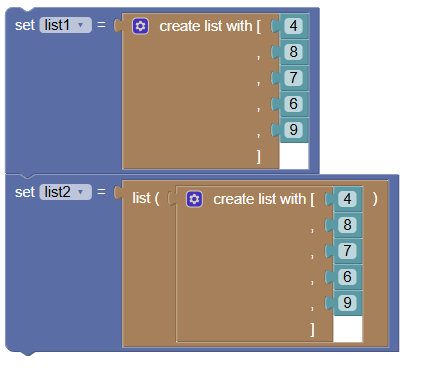 python
list1 = [4, 8, 7, 6, 9] list2 = list([4, 8, 7, 6, 9])
Items in a List:
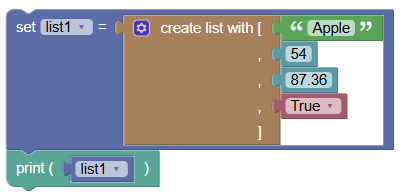
Items in a list can be of any datatype: integers, floats, strings, booleans, etc.
 python
list1 = ["Apple", 54, 87.36, True] print(list1)Output:
['Apple', 54, 87.36, True]
Accessing Items:
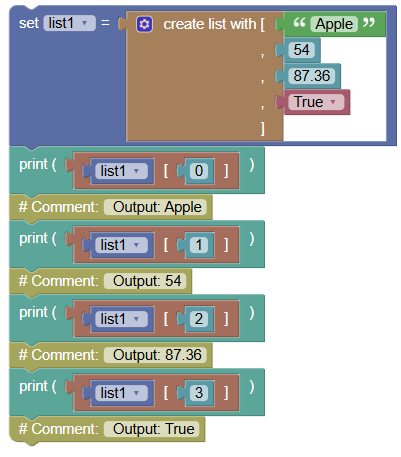
Lists are ordered collections, so you can access items using their index (starting from 0).
 python
list1 = ["Apple", 54, 87.36, True] print(list1[0]) # Output: Apple print(list1[1]) # Output: 54 print(list1[2]) # Output: 87.36 print(list1[3]) # Output: True
Updating Items:
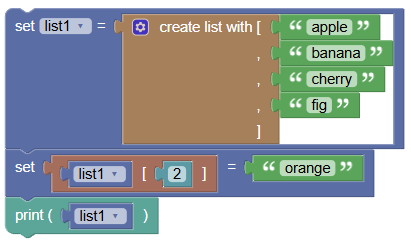
You can update items in a list using their index and the assignment operator.
 python
list1 = ['apple', 'banana', 'cherry', 'fig'] list1[2] = 'orange' print(list1)Output:
['apple', 'banana', 'orange', 'fig']
List Operations:
- Lists support many operations such as appending, removing, sorting, and more.
- Some common list methods include:
append(): Adds an item to the end.clear(): Removes all items.copy(): Returns a copy of the list.count(): Returns the number of occurrences of an item.extend(): Adds elements from another list.index(): Returns the index of the first occurrence of an item.insert(): Inserts an item at a given position.pop(): Removes the item at a given position.remove(): Removes the first occurrence of an item.reverse(): Reverses the order of the list.sort(): Sorts the list.
Summary:
- Lists are versatile and powerful for storing and managing collections of items in Python. They support a wide range of operations and can contain any datatype. Practice creating, accessing, and modifying lists to become proficient in using them!