Greater Than
What Is the Greater Than Operator?
- The greater than operator
>in Python is used to compare if one value is larger than another.
How to Use It:
The basic way to use the greater than operator is:
pythonresult = value1 > value2value1andvalue2are the values you want to compare.resultwill beTrueifvalue1is greater thanvalue2, andFalseif not.
Examples and Exercises:
Comparing Two Numbers:
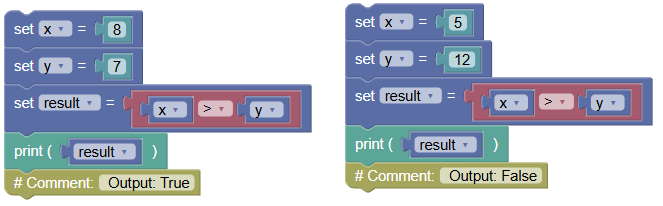 python
x = 8 y = 7 result = x > y print(result) # Output: True x = 5 y = 12 result = x > y print(result) # Output: FalseComparing Strings:
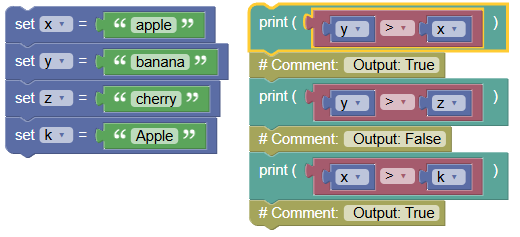
- You can also compare text using the greater than operator. Python compares them based on alphabetical order.
pythonx = 'apple' y = 'banana' z = 'cherry' k = 'Apple' print(y > x) # Output: True print(y > z) # Output: False print(x > k) # Output: TrueComparing Lists:
Lists can also be compared in Python. The comparison happens element by element.
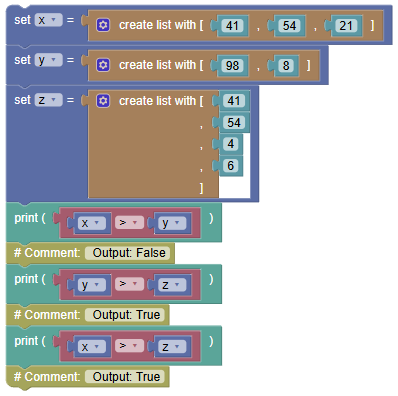
pythonx = [41, 54, 21] y = [98, 8] z = [41, 54, 4, 6] print(x > y) # Output: False print(y > z) # Output: True print(x > z) # Output: True
Summary:
- The greater than operator
>in Python helps you determine if one value is larger than another. It works with numbers, text, and even lists. Try the examples to see how it works!