IS
What Is the IS Operator?
- The
isoperator in Python is used to check if two variables point to the same memory location.
How to Use It:
The basic way to use the
isoperator is:pythonresult = variable1 is variable2variable1andvariable2are the variables you want to compare.resultwill beTrueif both variables point to the same memory location, andFalseif they do not.
Examples and Exercises:
Using the IS Operator:
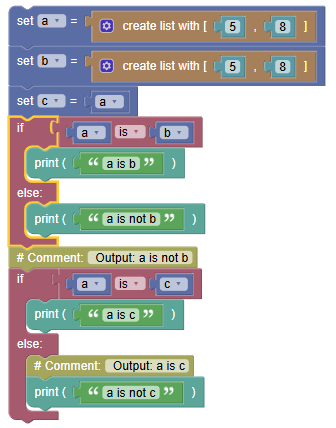 python
a = [5, 8] b = [5, 8] c = a if a is b: print('a is b') else: print('a is not b') # Output: a is not b if a is c: print('a is c') # Output: a is c else: print('a is not c')
Explanation:
- In the above example,
aandbhave the same contents, but they are different objects, soa is not breturnsFalse. - When
ais assigned toc,cpoints to the same object in memory asa, soa is creturnsTrue.
Summary:
- The
isoperator in Python helps you check if two variables point to the same memory location. It's useful for understanding object references and memory allocation. Try the example to see how it works!