Sets
What Are Sets?
- Sets are used to store multiple items in a single variable. They are one of the four built-in data types in Python used to store collections of data. The other three are List, Tuple, and Dictionary.
Creating a Set:
Sets are created using curly brackets
{}or theset()constructor. python
myset = {"apple", "banana", "cherry"} print(myset) # Output: {'banana', 'apple', 'cherry'}Output:
{'apple', 'banana', 'cherry'}
Properties of Sets:
- Unordered: Items do not have a defined order.
- Unchangeable: Once a set is created, you cannot change its items, but you can remove items and add new items.
- No Duplicates: Sets cannot have duplicate items.
Examples:
Creating a Set:
 python
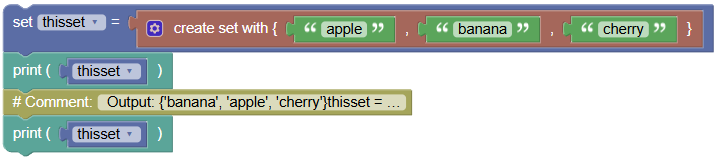
thisset = {"apple", "banana", "cherry"} print(thisset) # Output: {'banana', 'apple', 'cherry'}Output:
{'apple', 'banana', 'cherry'}Duplicate Values:
 python
thisset = {"apple", "banana", "cherry", "apple"} print(thisset)Output: {
'apple', 'banana', 'cherry'}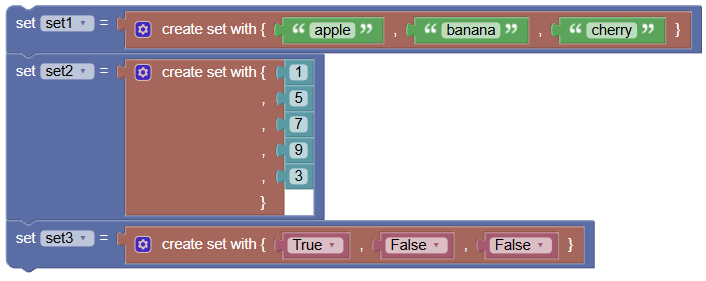
set1 = {"apple", "banana", "cherry"}
set2 = {1, 5, 7, 9, 3}
set3 = {True, False, False}
Mixed Data Types:
 python
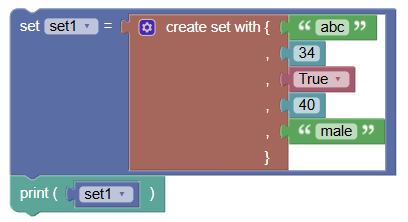
set1 = {"abc", 34, True, 40, "male"} print(set1)Output:
{True, 34, 40, 'male', 'abc'}
Summary:
- Sets are unordered collections of unique items. They are useful for storing items that must not contain duplicates. Practice creating, adding, removing, and iterating over sets to understand their properties and uses!